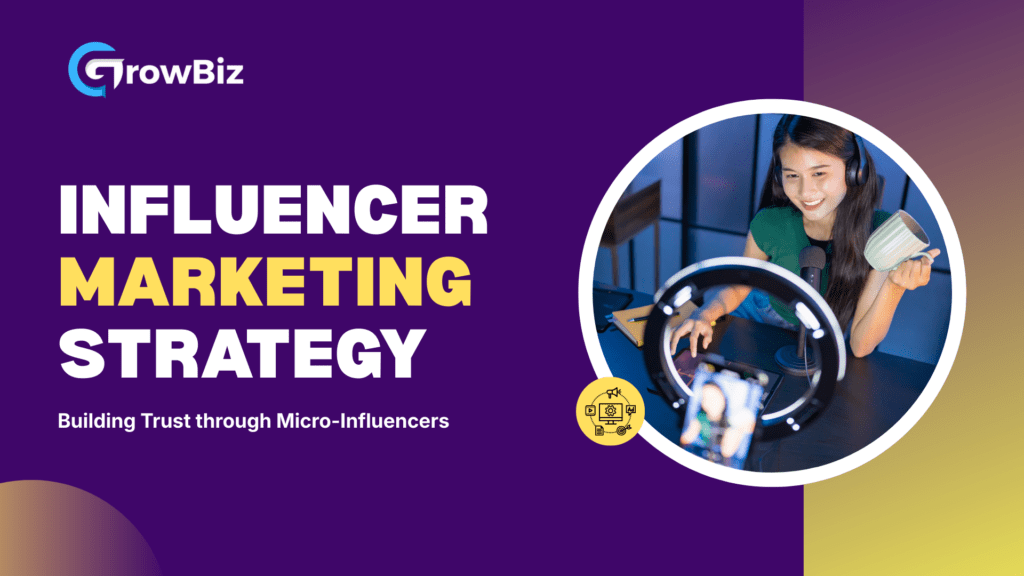
Influencer Marketing Trends 2026: Building Trust with Micro-Influencers and AI Creators
Influencer marketing is not new, but 2026 is different. Buyers scroll faster, ignore obvious ads, and double-check claims before they purchase. That is why the influencer marketing trends 2026 that win are built on trust, proof, and repeatable content systems. Instead of chasing the biggest names, high-Return on investment (ROI) brands are partnering with micro-influencers for authentic recommendations, and using AI creators to scale testing and production.
In this blog, you will learn how to choose creators safely, structure deals that protect your budget, and track results in a way that makes sense to founders.
If you want influencer campaigns that generate measurable sales, not just likes. Contact GrowBiz Tech to build a creator strategy that fits your product and budget.
What Changed in Influencer Marketing Trends 2026
Three shifts are shaping the market. First, audiences reward creators who feel real and consistent. Second, micro-influencers often outperform larger creators on engagement because their communities are tighter. Third, AI is now part of the creator workflow, and in some cases the creator can be virtual. The opportunity is bigger, but the rules are stricter.
Shift 1: Trust is the Main Currency
In 2026, trust shows up in actions, not compliments. Buyers save content, share it, ask questions, and click through when they believe the creator. Creators who show real use, honest pros and cons, and clear results often drive higher intent traffic.
Shift 2: Micro-Influencers are Winning Performance Budgets
Multiple industry reports and academic research show micro-influencers can achieve higher engagement per follower than larger creators. For many consumer products, micro-influencer marketing is a practical way to get more content variations and better conversion efficiency.
Shift 3: AI Creators are Scaling Content and Testing
AI helps creators and brands move faster. It can assist with scripting, editing, subtitles, thumbnails, and idea testing. Some brands also experiment with AI or virtual influencers for brand-safe output. The key is transparency and usefulness. If the content is AI-generated, make it clear and focus on helping the buyer.
Micro-Influencers: The Trust Engine for High-ROI Campaigns
Micro-influencers are creators with smaller, niche audiences. They often feel more relatable, reply to comments more, and influence buying decisions in specific categories. For e-commerce founders, micro creators can turn product benefits into real-life stories, demos, and reviews.

When Micro-Influencers are the Best Fit
- Your product needs a demo, unboxing, or before-and-after proof
- Your buyers rely on recommendations, not brand ads
- You want consistent conversions instead of a one-time spike
- You need multiple content variations to test hooks and messaging
How to pick micro-influencers without wasting budget
Follower count is not a strategy. To reduce risk, evaluate creators like you would evaluate a marketing channel. Focus on fit, quality, and proof.
- Check comment quality and look for real questions and conversations
- Review recent content for consistency, clarity, and honest product use
- Validate audience location and language if your brand targets a specific market
- Ask for basic performance proof such as story link clicks or past results
- Start with a paid test deliverable before offering a long partnership
AI Creators and Virtual Influencers: What They Are and When They Work
AI creators can mean two things. One is a human creator using AI tools to produce content faster. The other is a virtual persona that represents a brand. Both can work in 2026, but only when they add value and remain transparent.
Best Use Cases for AI Creators in 2026
- Rapid testing of scripts and hooks before you pay for larger creator deals
- Always-on product explainers that are consistent and brand-safe
- Localization of content with captions, translations, and multiple versions
- Retargeting creatives where speed and iteration matter
Where AI Creators can Damage Trust
- Sensitive categories where personal experience is the selling point
- Products with strict claims where accuracy must be verified
- Communities that value behind-the-scenes authenticity
Micro vs Macro vs AI Creators
Use this quick table to choose the creator type based on your campaign goal. This helps founders avoid paying for the wrong outcome.
Creator Type | Best For | Strength | Risk | Smart Move |
Micro-influencers | Trust, conversions, reviews, UGC-style content | High authenticity and engagement | Lower reach per creator | Work with several micro creators and scale the winners |
Macro-influencers | Big launches and awareness pushes | Fast reach and visibility | High cost, weaker intent for some niches | Use for awareness, then retarget with UGC and micro content |
AI creators / virtual influencers | Fast testing and brand-safe explainers | Speed and consistency | Trust issues if unclear or misleading | Disclose AI use and keep content practical and honest |
If you want a micro-influencer system plus AI-assisted content testing, GrowBiz Tech can build the creator shortlist, briefs, and tracking so you scale with confidence.
A Simple Founder-Friendly Campaign Framework (2026)
Most influencer programmes fail because they are treated like a one-off post. The winners treat it like a repeatable acquisition system. Use this step-by-step framework to keep campaigns measurable.
Step 1: Pick One Clear Outcome
Choose one primary outcome such as purchases, sign-ups, or qualified traffic. If you cannot define success in one sentence, you will struggle to measure ROI
Step 2: Match Creator Content to the Buyer Journey
Discovery content builds curiosity. Consideration content explains benefits. Conversion content pushes a clear offer. For most e-commerce brands, short video demos and real reviews work best in 2026.
Step 3: Write a Brief that Protects your Brand but Keeps Creators Authentic
A good brief includes product talking points, proof, banned claims, and the call to action. Then it gives creators freedom to speak in their own voice so content stays natural.
Step 4: Structure Deals that Reward Performance
Avoid paying only for exposure. Use deal structures that connect cost to outcomes and content reuse.
- Flat fee for deliverables when you need predictable production
- Bonus for sales or sign-ups when results exceed targets
- Affiliate commission for long-term partnerships
- Usage rights so you can run creator content as paid ads
Step 5: Track Correctly and Compare Creators Fairly
Track with discount codes, tracked links, and dedicated landing pages. Compare creators using cost per purchase or cost per lead, not just views.
Step 6: Repurpose Winners into Ads and Website Assets
Turn top creator content into paid ads, product page videos, email creatives, and retargeting assets. This extends the value of each deliverable.
How to Measure Influencer ROI Without Confusing Reports
Founders do not need a long report. You need a clear view of what you paid and what you got back.
If Your Goal is Sales
- Revenue from tracked links and codes
- Cost per purchase and profit impact
- Average order value from influencer traffic
- Refund rate if your category has high returns
If Your Goal is Awareness
- Reach and video views
- Watch time and completion rate
- Saves and shares, which signal strong intent
- Brand search lift and profile visits
Disclosure and Brand Safety
Clear disclosure protects trust and reduces legal risk. Sponsored content should be labelled clearly. If you are using AI-generated content or a virtual persona, disclose it. Buyers reward honesty in 2026.
How GrowBiz Tech Helps Consumer Brands Win with Influencer Marketing
GrowBiz Tech helps brands move from random creator posts to a measurable influencer system. The focus is on trust, content quality, and ROI tracking.
- Creator discovery and vetting so you avoid fake engagement and poor audience fit
- Campaign strategy and briefs designed for conversions, not vanity metrics
- Micro-influencer and UGC programmes that produce repeatable content pipelines
- AI-assisted content testing so you find winning hooks before scaling spend
- Tracking setup with links, codes, and clear reporting for founders
- Repurposing creator content into ads and website assets to maximise ROI
Frequently Asked Questions
What makes micro-influencers better for ROI
Micro-influencers often feel more relatable and have tighter communities. That can lead to stronger engagement and higher intent traffic for many consumer products.
How many micro-influencers should an e-commerce brand start with
A practical start is 5 to 10 creators for testing. Track results, then increase budget only for creators who drive real sales or produce reusable content.
What is an AI creator
An AI creator can be a virtual persona or content produced with AI tools. Many human creators also use AI for scripting, editing, captions, and testing variations.
Will buyers trust AI creator content
They can, if you are transparent and the content is useful. Trust drops when AI is used to mislead or exaggerate claims
How do I avoid fake followers and fake engagement
Look at comment quality, consistency of views across recent posts, and audience fit. Start with a test deliverable before long-term contracts.
Do I need contracts for influencer campaigns
Yes. Contracts protect you on deliverables, disclosure, usage rights, deadlines, and what happens if content is not delivered.
Do I need contracts for influencer campaigns
Flat fees help with predictable production. Commissions and bonuses connect cost to outcomes. Many brands use a hybrid approach.
How long should a campaign run to judge performance
Testing can run for 2 to 4 weeks. Strong partnerships often run for 3 months or longer for consistent results and better audience trust.
Conclusion: Trust-Led Creator Marketing is the Growth Play for 2026
The best influencer marketing in 2026 is built on trust, proof, and repeatable systems. Micro-influencers can drive performance, AI tools can speed up testing, and the real winners combine both with strong tracking and content repurposing.
Are you ready to build a high-ROI creator programme? Contact GrowBiz Tech to launch micro-influencer partnerships and AI-assisted content that drives real sales in 2026.